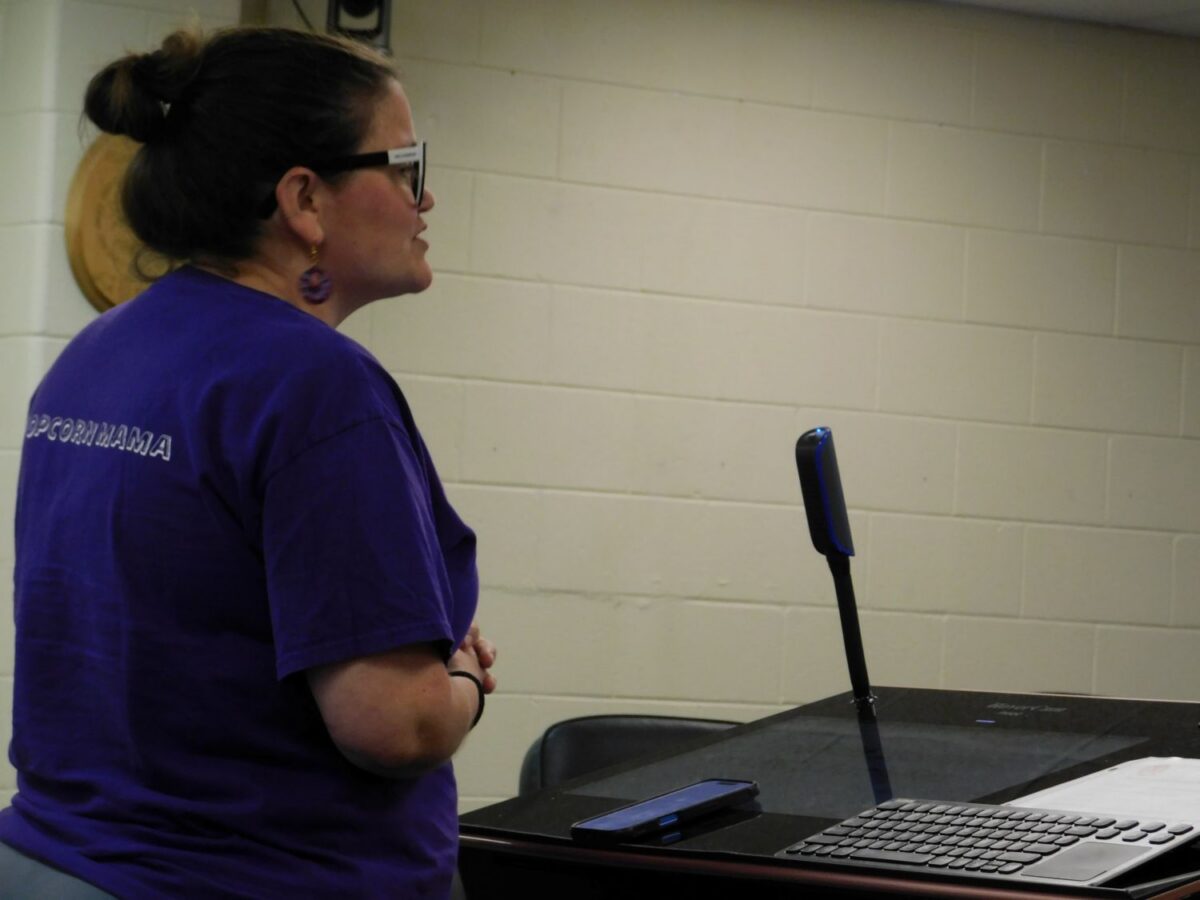
After hearing concerns from three Richmond Community Schools teachers about the potential elimination of a policy on capping class sizes, the board agreed to keep for the time being, even though district officials said the elimination was only prompted by the need to remove outdated state language.
Steven Hensley, RCS’ human resources director, said the idea to remove the policy wasn’t because RCS officials don’t care about class sizes.
He said the statute referenced Prime Time funding made popular in the 1980s as an incentive for more individualized instruction. It allowed Indiana schools to hire instructional assistants for K-3 classrooms with large enrollments to establish a more favorable student-teacher ratio. That statute has since been repealed and the funding no longer exists, so he’d suggested eliminating the policy.
However, RCS board members said the optics of rescinding the policy without having a replacement were poor for teachers and the community. The board agreed to keep the current policy until another version can be written and voted upon.
Overall, Hensley said RCS has three pockets of larger class sizes at Charles and Vaile that they’re working to address, but there’s no classroom average higher than 24 per grade at the elementary level.
Hensley said RCS had to make budgetary choices to reduce some teaching positions over the summer, and they were smart with staff attrition, but the district has to be financially solvent, so a new policy must take that into account.
Before Hensley spoke, RCS teachers Roya Maze, Emily Christian and Elijah Gamber shared their concerns on class sizes.
Gamber said he wants to give his Advanced Placement government students useful feedback to be good writers, and he believes that attention to feedback could make him an exceptional teacher someday, but with large classes, his prep period isn’t long enough and the alternative is taking time away from his own children at home.
Christian said she spends more time reteaching her own children at home when they’re in larger classes, but not all parents have that much time or ability to do so. She said she notices when her kids are in larger classes because they seemed more stressed and didn’t get their questions answered as often.
Even teachers with excellent class management have a much harder time addressing student behaviors in large classes, Christian said. Large classes that have a paraprofessional can lose that added help when schools are short on substitute teachers, she said.
Gamber said last year, he initially had 31 students in a room that only had 30 seats, so he was moving a seat back and forth with another classroom for a few days.
Maze, who teaches in the Logos gifted and talented program, said she wanted to advocate for all RCS teachers and families because research shows smaller classes lead to better behavior with fewer disruptions, improved engagement, more individual attention, and differentiated instruction, stronger relationships and benefits for underserved students. Positive effects on academic outcomes are strongest at the youngest grades.
Maze said she realizes smaller class sizes come at a cost, but creative solutions could be developed, and the alternative is losing more students to neighboring districts.
In other business
- Richmond Education Association President Jay Lee said communication between REA and the RCS central office had been “very limited” lately, and that increased communication is needed to ensure student success. He noted Abraham Lincoln’s quote that a house divided will not stand, so all parties need to work together.
- The board approved several policies on topics, including bullying, child abuse and neglect, weapons, possession of firearms and weapons by visitors, technology resources and other electronic equipment, promotion/placement/retention, student conduct, accounting system for capital assets, environmental health and safety issues (indoor air quality, animals in the classroom and idling vehicles on school property) and automated external defibrillators.
- The next regular business meeting will be at 5:30 p.m. Wednesday, Sept. 16, and the next policy meeting will be at 4 p.m. Tuesday, Sept. 29. Both are open to the public and in the administration building, 300 Hub Etchison Parkway.
A version of this article appeared in the September 2 2026 print edition of the Western Wayne News.