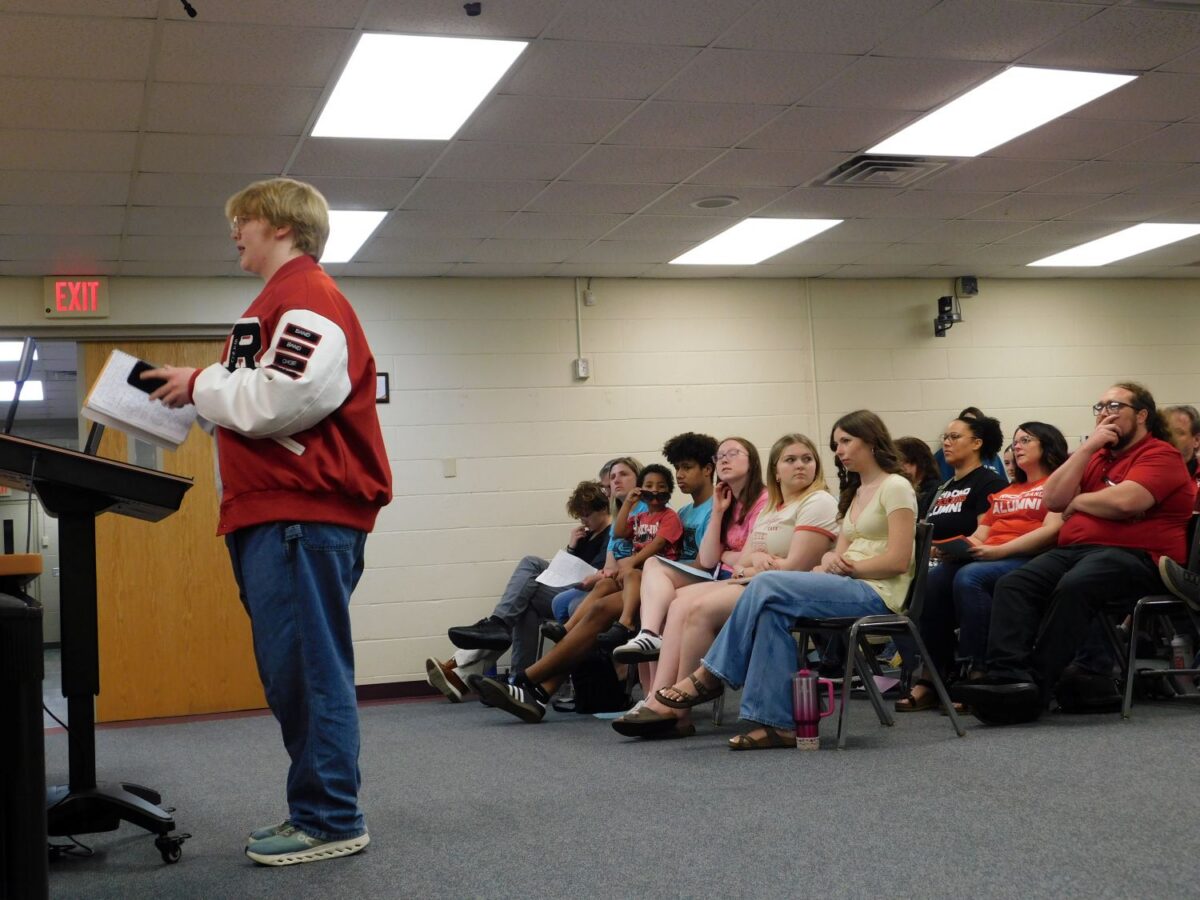
After two Richmond Community Schools board members choked up while describing how school music programs impacted their lives, the board charged administrators to explore spending cuts that leave those programs in place.
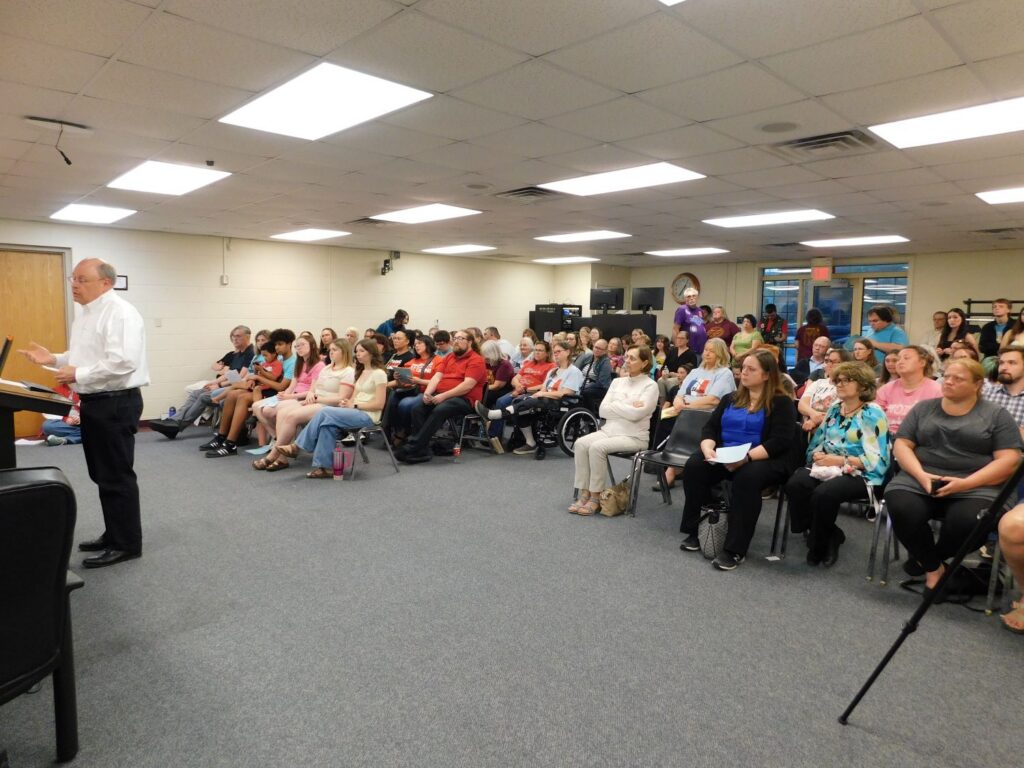
Students, parents, alumni and residents concerned about potential reductions to RCS’ music, visual art and physical education teaching staff filled RCS’ meeting room for its April 14 meeting. About 30 more watched on screens from an overflow room or waiting outside.
Before 20 community members spoke, school board members said the many emails, phone calls and in-person chats they’d had with constituents were appreciated. They agree those programs play vital roles in students’ education and want them to continue.
Board member Kristen Brunton, a former RCS teacher whose children participated in arts, said she hopes smaller cuts can be balanced more widely, and those cuts need to start at the administrative level.
She teaches a course at IU East on integrating the arts in education, and noted creative arts boost student achievement and are one of the many reasons families choose RCS.
Brunton recalled receiving reduction in force notifications two years in a row that her job could be cut, and understands stress that RCS employees feel, but knows doing nothing to reduce costs isn’t an option.
Brunton noted declining enrollment and rising costs for salaries, supplies and services. She also acknowledged unexpected new financial challenges created when Indiana legislators passed Senate Enrolled Act 1, affecting property taxes that she said negatively impacts 99% of Indiana public school districts.
During a quarterly progress report on RCS’ new strategic plan before public commentary, assistant superintendent of business and finance Karen Scalf noted RCS’ education fund is based on student enrollment and it’s used for curricular and co-curricular programs. Projections show RCS’ $2,024,436.10 shortfall in that fund by December 2026.
She explained that operations and debt service funds come from real and personal property taxes and are limited to needs such as facilities, technology and buses.
Rainy day funds can only be used for one-time expenditures.
Scalf said administrators are proactively discussing budget cuts.
“We’re trying to do all we can to minimize the impact in every way possible,” Scalf said.
Board member Nicole Stults, who’s also Richmond Art Museum’s board president, noted pride in RHS being the only United States high school attached to a professional art museum and also offering the nation’s first full high school orchestra. She said that history is embedded in the community’s culture. She noted increasing numbers for orchestra participation.
Board member Aaron Stevens noted graduation rates among arts participants far exceed those of athletics, and fellow board member Michael Elorreaga said through participation in creative arts, many kids finally find where they belong.
Kym Pickering has four children attending RCS, including saxophone and tuba players and a seven-year-old set on being an art teacher, and said she was disappointed in the proposed solution. Richmond Education Association previously told WWN that RCS had proposed cutting some creative arts teachers at higher grade levels and moving elementary teachers into those roles, with paraprofessionals instructing many elementary students in those subjects.
Residents addressing the board agreed that cutting arts and physical education programs and staffing is not acceptable.
Student Coryanne Puterbaugh said she wouldn’t be majoring in contemporary dance next year at Indiana University if she hadn’t seen the Devilettes perform.
Jessica Raposo Coleman, who leads Indiana University East’s music program, noted shortages of music teachers and music therapists. She said the training for those jobs starts in grades K-12.
Music teacher Laura Arndt spoke on behalf of her physical education colleagues, raising safety concerns if paraprofessionals lead gym classes. She also noted frequent turnover of paraprofessionals. “If we don’t value the education of teachers, how do we expect students to value education?” she asked.
Superintendent Curtis Wright said administrators will look at all options before budgeting and contract deadlines arrive. Reduction in force conversations can become formal May 1, and teachers need to be notified by June 1 if their jobs are affected.
On April 8, Wright told the community $728,000 in cuts have been made since last fall, ranging from technology to services and supplies as far from classrooms as possible, but 22 teaching positions still would need to be eliminated.
He told WWN after the board meeting that despite public perception, those cuts started with administration personnel in district-wide and building-level leadership, and have salvaged at least three teaching positions to date.
Wright said RCS is carefully following all required procedures for a reduction in force, so many details can’t yet be shared publicly. This is the first RIF the current administrative team has had to make, and only one board member (Stevens) was serving during RCS’ last RIF.
Despite upcoming cuts, Wright said RCS will “sustain the amazing things we’ve been doing the last few years.”
A version of this article appeared in the April 22 2026 print edition of the Western Wayne News.