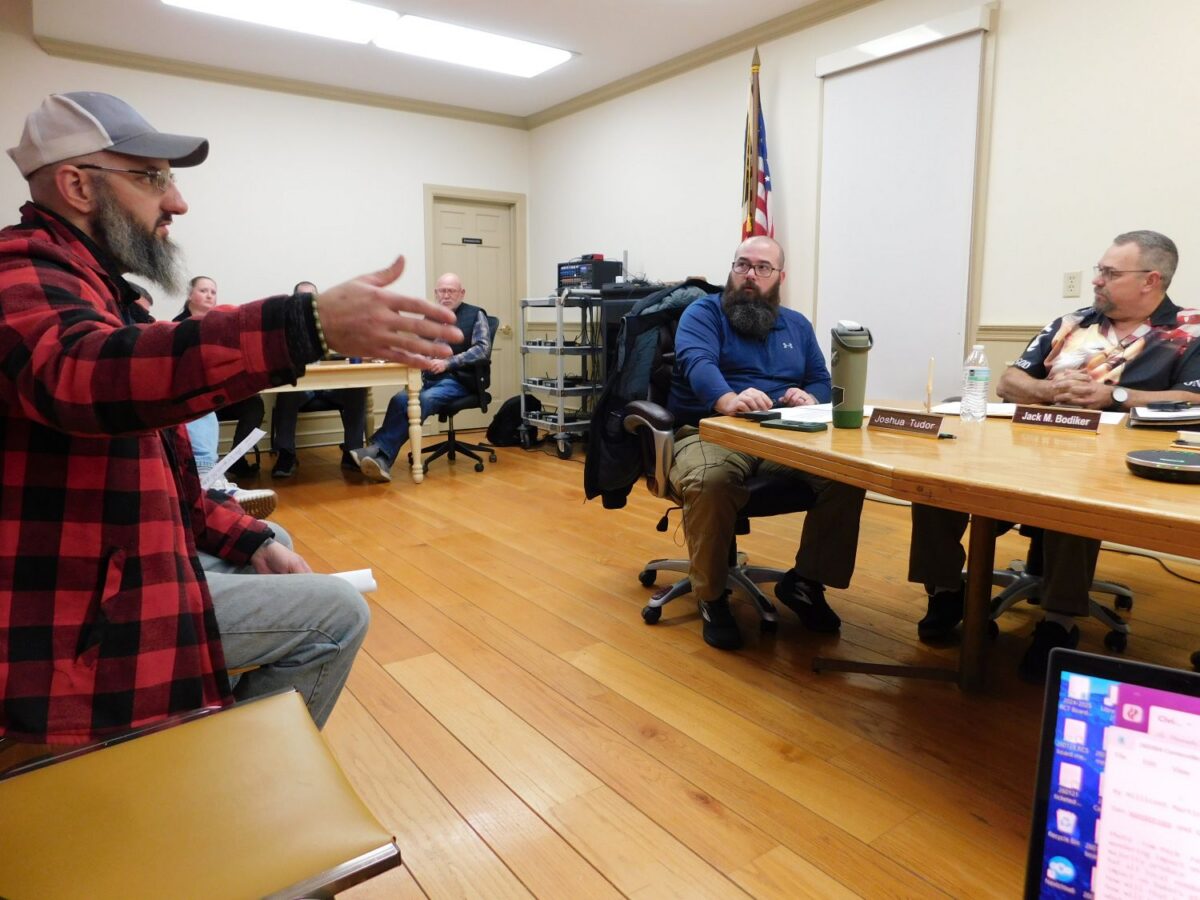
Centerville’s public hearing on a proposed food and beverage tax appeared to raise more questions for town councilors than it provided answers.
During the Feb. 24 hearing that preceded the monthly work session, a few entrepreneurs asked how the tax would affect their businesses and whether the money could positively impact the town. About a dozen people attended the meeting.
Tom Peck asked about potential impact on vendors at Centerville Farmers Market, which is now a committee of Main Street Centerville. The majority of vendors are local and sell produce, which wouldn’t be taxed, but the market occasionally attracts bakers offering prepared goods and out-of-county food or beverage trucks.
Peck asked how the taxes would be collected and enforced, what penalties might be charged for vendors who aren’t able to or don’t properly document the tax, and if market volunteers might have a role in making sure it’s collected.
Vicki Chasteen asked whether out-of-area food trucks at Archway Days would also be affected.
Beyond logistics, some entrepreneurs asked whether Centerville’s handful of eateries would generate enough funds to be useful.
Mindy Myers, owner of new eatery Mr. B’s Chicken Salad, said she’d support the tax if it actually helped projects such as parks, sidewalks and additional parking. However, Centerville has only a handful of restaurants that would be collecting the additional taxes.
John Myers asked if council had investigated how much revenue would be generated annually. He said if every Centerville resident (about 2,200) ate a $15 meal at one restaurant every day for 365 days, which would be unrealistic, annual revenue would be about $150,000.
When sidewalk removal/replacement costs about $30 per square foot, he said $150,000 in tax revenue would cover about 600 feet of sidewalk. It would take more than 15 years to complete Main Street’s 10,000 feet of sidewalk. A more realistic annual tax revenue would be about $70,000, he said.
“I think it will impact restaurants far more in a negative way than the town of Centerville in a positive way,” he said.
Brown Jug owner Doug Towns favors checks and balances. He said he’d support the tax if it’s needed, but if it’s implemented, he believes the impacted businesses should be involved in deciding how the tax revenue is spent.
Americana Pizza owners Chad and Jennifer Robertson submitted a letter of opposition. The Robertsons said businesses are already dealing with higher food costs, operating and utility costs, and staff shortages. They believe an added tax discourages dining out, impacts customers financially and could negatively impact sales, which would affect Americana’s ability to support the community through jobs, donations and sponsorships.
Councilor Josh Tudor said he’s not a proponent of more taxes, and his family enjoys eating at all local restaurants. However, the town will lose funds through property tax changes, he noted, and costs to offer town services — ranging from first responders to streets — won’t decrease. That makes quality-of-life projects even harder to fund.
Tudor said he’s heard some towns might double their water or trash bills that affect all residents to make up lost revenue, so he believes a food and beverage tax is a better way to minimize the impact.
Through participating in the development of the 2026 Wayne County Strategic Investment Plan, town officials determined any food and beverage tax would be used for downtown beautification and accessibility projects such as a new parking lot, historically styled streetlights and upgraded sidewalks, estimated at $175,000. The other designated use would be for potentially adding a second park, potentially near the current youth league sports area off South Morton Avenue that could include pickleball and basketball courts and playground equipment for an estimated $350,000.
Councilor Jack Bodiker expects some of the tax would be paid by other Wayne County residents and travelers.
“What you’re seeing is an honest council trying to figure out how to move forward without saddling the community with higher taxes,” Tudor said, noting responsible spending is a legitimate concern from residents. “… I wouldn’t expect anything less from people who care about the community.”
Tudor, Bodiker and David Cate said they weren’t sure how they’ll vote on the ordinance.
Cate said his family eats out a lot in Centerville and Richmond, and noted Richmond recently adopted a food and beverage tax starting March 1. Councilors Dan Wandersee and Gary Holbert were absent.
They could vote at council’s 7 p.m. Tuesday, March 10, meeting at town hall, 220 E. Main St., Centerville. The public is invited.
A version of this article appeared in the March 4 2026 print edition of the Western Wayne News.