Richmond’s parks system shows wear and tear — whether it’s the aging Glen Miller Park playground or building roofs, the Glen Miller pond or park trails.
Officials say there’s never been enough money to handle all of the parks department’s yearly needs but the city is progressing toward implementing a 1% food and beverage tax on specific transactions within city limits. That tax could generate up to $1.5 million annually to benefit parks, trails and Whitewater Gorge activation.
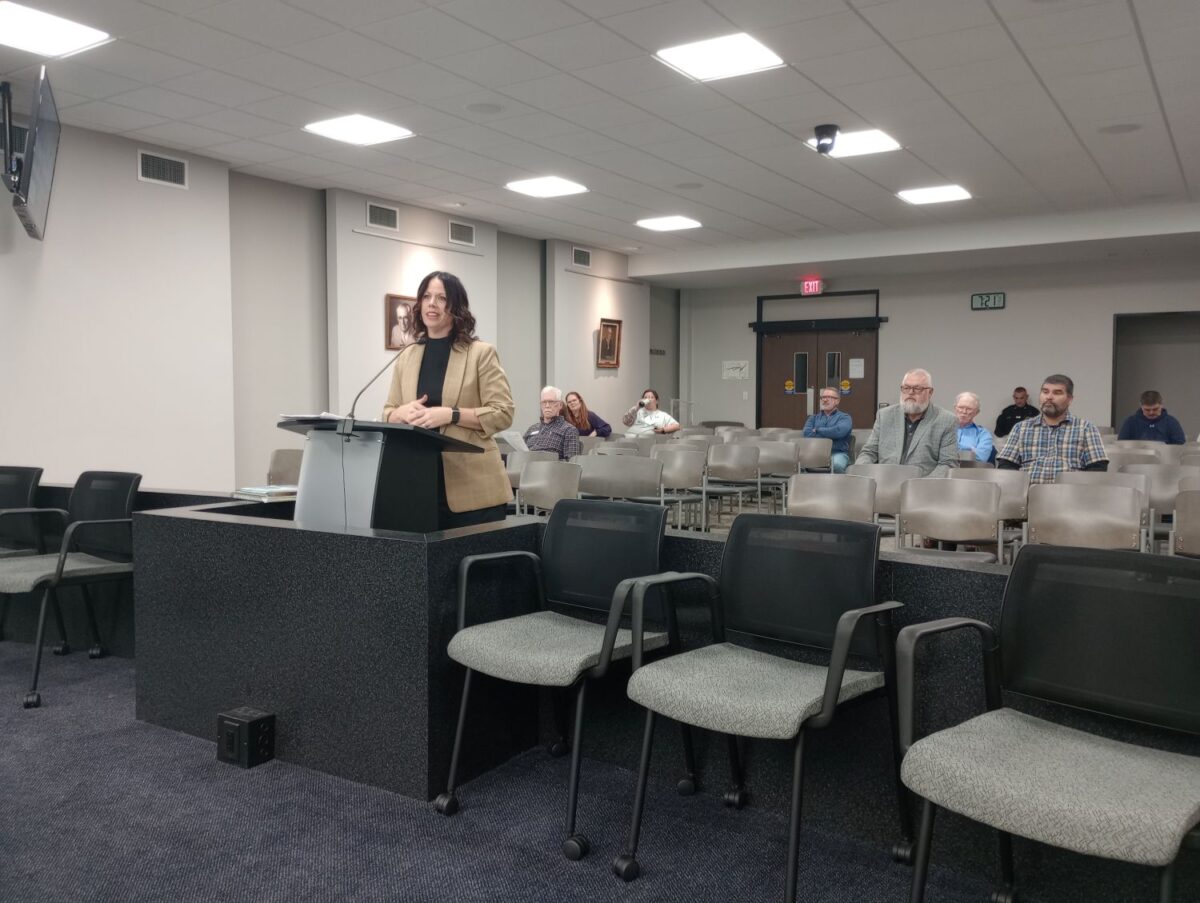
“Currently, we’re really chasing our tails with aging infrastructure and deferred maintenance, and this is going to help tremendously,” said Denise Retz, the parks superintendent, during a Nov. 17 presentation to Richmond Common Council.
Council that night voted 8-1 in favor of a resolution that supports a food and beverage tax. Council expects to receive an ordinance that would enact the tax during its Dec. 1 meeting, then it would schedule a required public hearing.
Bill Engle, who has been a parks board member and is council’s parks liaison, spearheaded a group of four council members and two parks board members who studied the food and beverage tax and its possible impacts on parks during a time when the city is rightsizing government amid revenue shortfalls.
“We cannot forget about our commitment to our citizens, and that includes providing clean, safe up-to-date parks for them to enjoy,” Engle said. “I believe we have a strong, vital, thriving system of parks, and one that we can be proud of, but we must continue that commitment to parks.”
Local parks are a documented economic engine for Indiana, adding about $543 million to the state economy in 2021 through direct, indirect, and induced spending, according to a 2024 report by Indiana Parks and Recreation Association. Parks also support more than 9,000 jobs annually, generating $318 million in labor income and producing $1.27 billion in economic output from park-related activities.
The report notes that with only 4% of Indiana’s land area dedicated to parks despite this impact, maintaining and upgrading local park systems can be a high-return investment for communities seeking economic stability and growth.
Retz presented council with a priority list of parks projects with an estimated $7 million cost.
“This new 1% food and beverage tax will support our future goals of providing active spaces, accessible trail systems and unique regional destinations,” she said. “We need that influx of cash to be able to bond and have a repayment source to do so. There’s not another way.”
Council member Jerry Purcell asked about accumulating the tax money to pay for projects without a bond, saying he opposes using tax money to pay interest. Retz said that ultimately whether to bond will be council’s decision, one that will determine how quickly projects progress.
Retz divided the priority projects into three areas: sustain what we have, make necessary improvements and create new destinations. The initial category includes dredging the Glen Miller lake for the first time since 1972 to restore clean water and healthy habitats at a $200,000 price tag. Twelve park building roofs have been identified as needing repairs, including seven at Glen Miller for about $175,000.
The parks department also oversees 8 miles of trails that need about $15,000 in maintenance.
“We want to continue to repair and improve along these 8 miles of trails within our parks because these are important,” Retz said.
At Highland Lake Golf Course, installing a new pump system and upgrading the irrigation system would cost about $700,000. In the improvements category, Highland Lake, which is the home course for golf teams from three high schools and Indiana University East, would receive infrastructure and simulators to create year-round playing opportunities for about $400,000.
“We do have a lot of high schools who utilize this area and would really take advantage of the simulator area for year-round use and year-round practice, as well,” Retz said.
Back at Glen Miller, the playground and splash pad date to a 1999 bond. That makes the playground the oldest in the parks system, and Retz said it’s “fading fast.” A new playground is estimated to cost $1.75 million, with another $450,000 for a new splash pad.
“It gets a tremendous amount of use, and we love that,” Retz said about the playground. “It’s one of our largest playgrounds, but it’s our flagship park and it deserves to have a flagship playground.”
Restoring the EG Hill fountain in the rose garden is estimated at $200,000, and providing new trash cans, picnic tables and signage is estimated at $1.4 million. Retz said trash cans in poor condition create problems for the parks department when animals pull out trash that then blows across the parks.
Improvements in the Starr Gennett Building and gorge areas could attract visitors. A gorge amphitheater with space for 2,000 people would cost about $2.5 million, and a new plaza at the Starr-Gennett Building would cost about $500,000. The Starr-Gennett Building also needs updates, including better winterization.
“A lot of people do utilize this venue, and a lot more would utilize it if we had it winterized properly,” Retz said.
Overall, the projects will strengthen the parks system for the future, according to Retz. Council member Justin Burkhardt said that’s worth the pain of implementing and paying a new tax.
“We have a decision right now, and the decision is, what do we think about the pride of our city and the future of our city?” Burkhardt said. “I’m very supportive of making Richmond a better place and, by that, through parks.”
A version of this article appeared in the November 26 2025 print edition of the Western Wayne News.