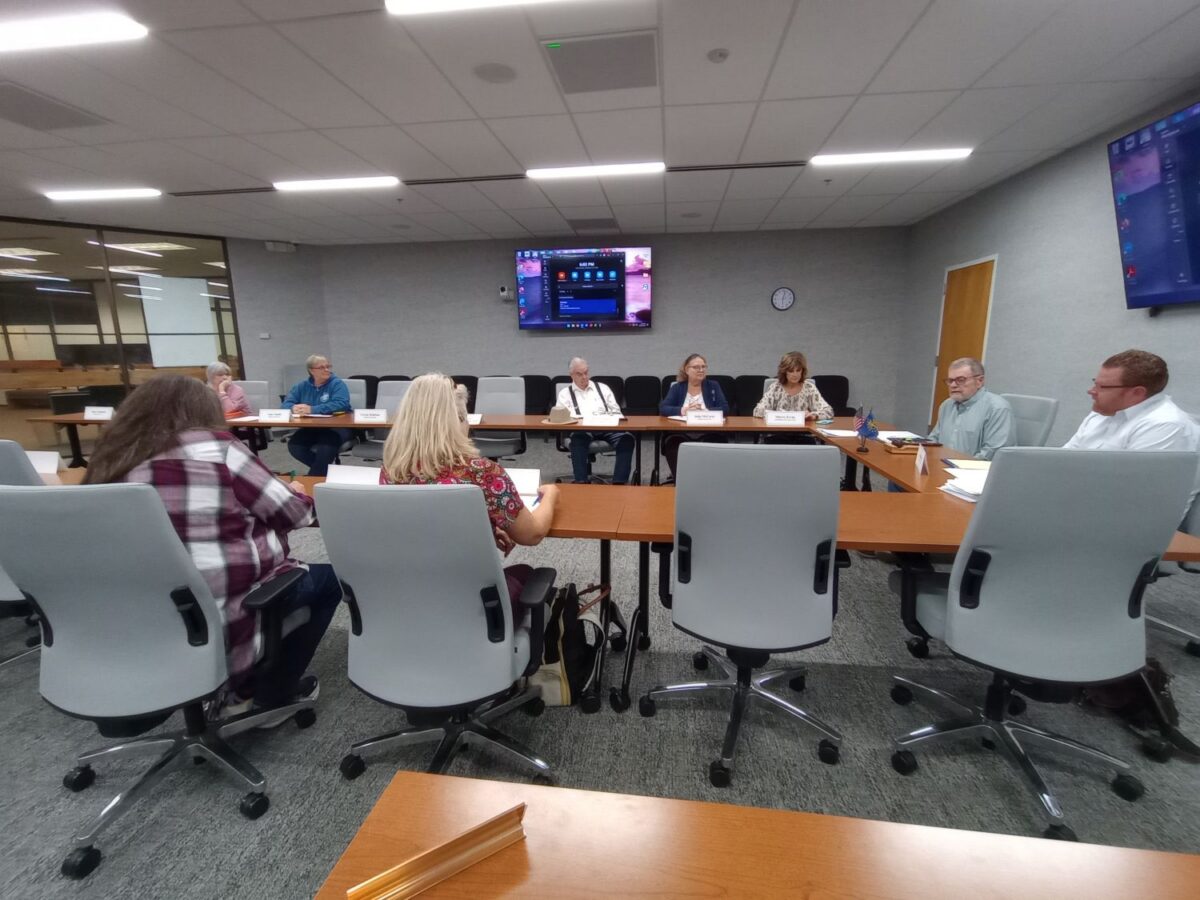
Wayne County’s second Municipal Unit Strategic Taskforce meeting took a different tone when discussing local income tax changes.
During a Sept. 16 meeting, municipalities requested they receive maximum tax revenue; however, during the Oct. 21 meeting, they focused on at least maintaining the property and income tax revenue they currently receive. Wayne County Council representative Max Smith ran the meeting, which was attended by Richmond’s controller and clerk-treasurers from Cambridge City, Dublin, East Germantown, Economy, Greens Fork, Milton and Spring Grove.
As state legislation currently stands, Wayne County Council in 2028 will enact a municipal local income tax rate up to 1.2% that takes effect in 2029, with revenue distributed by population. As the only municipality with more than 3,500 people, Richmond has the option to accept that rate or implement a rate of its own.
County council also will enact up to 1.7% for county services, fire service or EMS, and nonmunicipal taxing entities, such as townships and libraries. The total rate may not exceed 2.9%. Currently, in the structure that the state legislation replaces, county residents pay 1.25% in local income taxes, composed of a 1% service rate and 0.25% economic development rate. That’s tied for 80th most among Indiana’s 92 counties.
Municipal representatives stressed they prefer a revenue increase; however, they need to maintain current revenues.
“Naturally, everybody would want more, but with the way the economy is now, I do not see putting that on our citizens as an additional burden,” said Tracy McGinnis, Richmond’s controller, with others agreeing.
During 2028, taxing entities must formally request receiving LIT money. Smith recommended that when doing so, they provide a revenue figure and justification for why they need that revenue.
The state authorized MUST meetings that could provide a unanimous, nonbinding agreement about the municipal LIT rate. Because not all county municipalities attended either MUST meeting, no unanimous agreement could be reached.
Smith said council has not discussed how it will determine the LIT rates. County councils were assigned the task because each county voter has the opportunity to vote for a majority of the seven council members — three at-large and the voter’s district representative.
The new LIT structure does not include schools or economic development. Townships and libraries are both included in the nonmunicipal rate that’s capped at 0.2%. Representatives from schools, townships and libraries attended the MUST meetings to express their need for continued LIT revenue.
“I just want to put 2 cents in for the townships, because I know we’re going to have to ask for money,” said Vicki Chasteen, trustee for Center Township. “That LIT hit is kind of powerful for us. That LIT was very helpful in a lot of areas for us.”
Karen Bays-Winslow, director of the Cambridge City Public Library, said LIT revenue funds 25% of the library’s budget, and losing that funding could impact library services.
“Funding literacy is a financial imperative for our communities, because if we put the money in on the education end and the library end, we don’t have to put as much money in to clean up afterward when things go wrong,” she said. “Libraries and schools enhance the overall quality of life for our communities, and I really believe that civilized societies have to have them.”
A version of this article appeared in the October 28 2026 print edition of the Western Wayne News.