Unhappy taxpayers thinking this year’s property tax bills didn’t provide them promised relief won’t fully see the state legislature’s reforms for a few more years.
Comprehensive legislation passed during the Indiana General Assembly’s 2025 session phases in reforms through 2031 payments. At that time, property owners will pay taxes on just one-third of their properties’ assessed values, but because those assessed values could increase from now to then, the reforms provide a savings over what could have been, if not an actual lower bill.
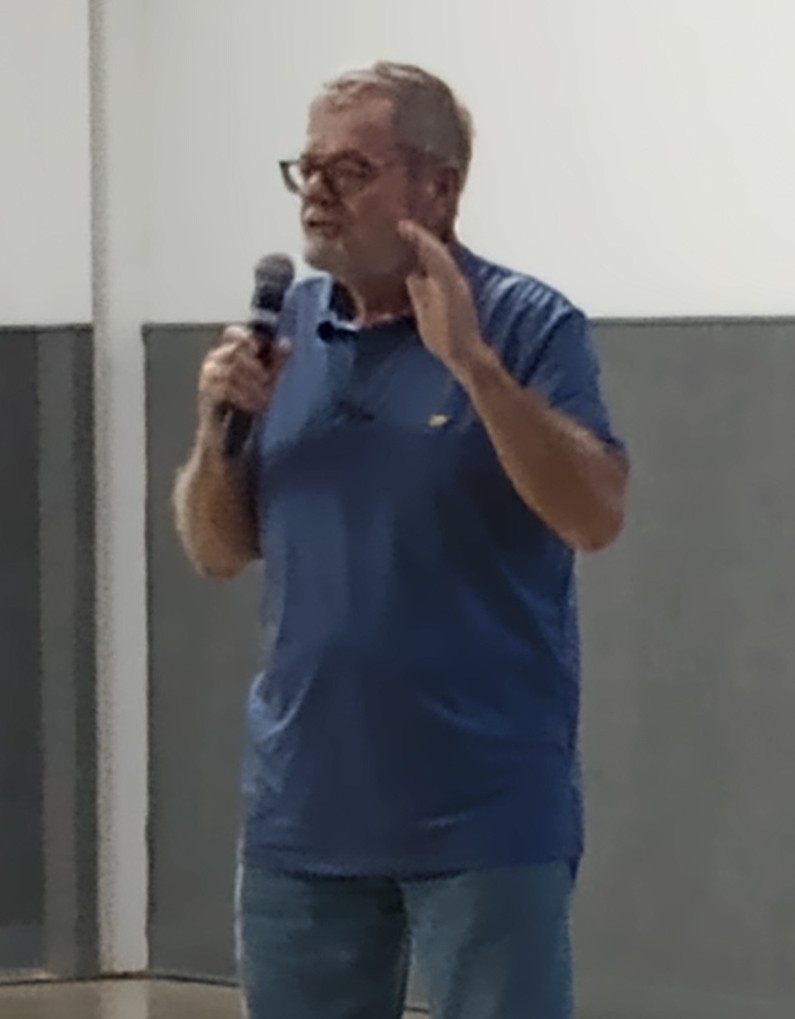
“They looked at their tax bill this year (and) said, ‘My taxes didn’t go down even though you passed this historic property tax reform,’” said Ryan Hoff, the Indiana Farm Bureau’s senior director for government affairs, during a July 28 tax reform presentation. “Well, in a lot of ways, that relief is yet to come. That rolls in over the next few years, and that is when you’re going to start seeing it on your tax bill.”
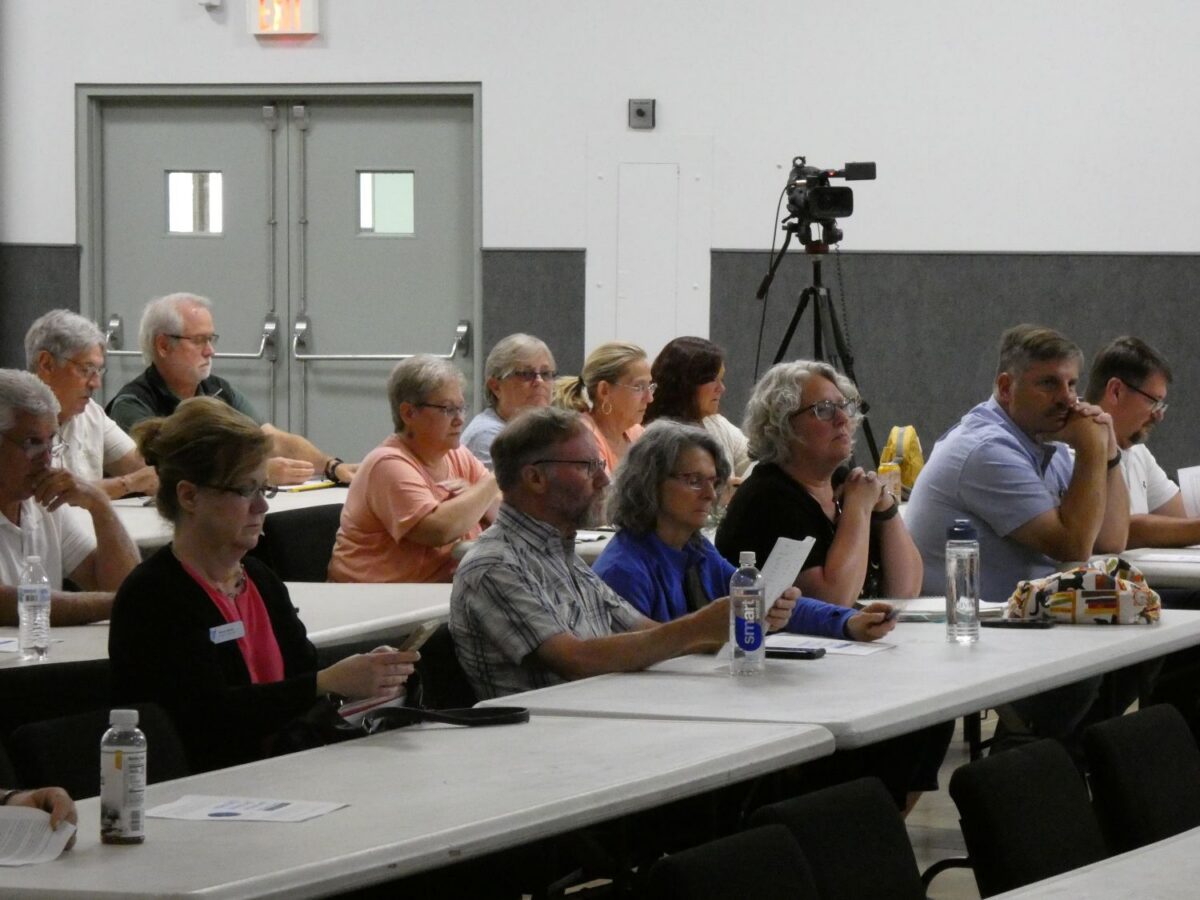
Wayne County’s commissioners sponsored the presentation inside First Bank Kuhlman Center at the Wayne County Fairgrounds. About 45 elected officials listened to Hoff and Jamie Bolser, director of government affairs for the Association of Indiana Counties, explain the property tax impacts and the local income tax changes looming in 2029.
This year’s property tax bills reflected the Republican-controlled legislature ending 10 deductions from assessed values and implementing three credits, which are subtracted from the tax owed. The new credits were $150 for ages 65 and older, $125 for blind or disabled property owners, and 10% up to $300 as a supplemental homestead credit. Tax credits for disabled veterans take effect for 2027 property tax bills.
The homestead deductions for property used as a primary residence began decreasing on 2026 bills while the supplemental homestead deduction began increasing. The homestead deduction that was $48,000 on 2026 bills will decrease to $40,000 in 2027, $30,000 in 2028, $20,000 in 2029, $10,000 in 2030, then zero. Conversely, the supplemental homestead deduction that was 40% on this year’s bills will increase to 46% in 2027, 52% in 2028, 57% in 2029, 62% in 2030 and 66.7% in 2031.
That means property owners will owe taxes on just 33.3% of their assessed values. Had the previous deductions that had largely been in place for decades continued without reform, the owner of a home now assessed at $100,000 would pay on 34% of the assessed value in 2031, the owner of a $250,000 home would pay on 52% and the owner of a $600,000 home would pay on 59%.
Through the changes, governmental entities will receive more property tax revenue than previous years; however, the revenue won’t reach anticipated levels had the legislature not tweaked the system. Bolser presented charts that showed total statewide property tax revenue gains of $224.1 million in 2026, $562.2 million in 2027 and $220.0 million in 2028; however, the revenues are lower than what entities would have expected by $331.5 million in 2026, $400.3 million in 2027 and $690.7 million in 2028.
Bolser noted that taxpayers naturally focus on more taxes being collected, while governments bemoan lost revenue.
The legislature has been capping the annual tax levy growth quotient at 4%, but did not do so for 2027. That means the growth quotient for 2027 budgeting will be 6%. It’s that growth that explains the more substantial 2027 increase in statewide tax revenues.
Along with the property tax changes, the legislature revamped the local income tax structure. The current structure will end in 2028, with county councils and, possibly, cities enacting new taxes for 2029.
Currently, Hoosiers can pay up to 2.5% in local income taxes depending on where they live. Wayne County’s rate is half that at 1.25% and significantly lower than the 1.91% state average. The LIT rate can include components for the county’s certified share, economic development, public safety, jail, emergency medical services, judicial and acute care hospital.
The new structure permits the county council to enact a service rate of 1.2% plus 0.4% for fire service or EMS and 0.2% for nonmunicipal civil taxing entities such as townships and libraries. However, the maximum rate is 1.7%, so the county cannot tax all three rates at the maximum.
The county service rate will include the county’s certified shares, public safety, economic development, jail, EMS, judicial and acute care hospitals, plus any special purpose taxes or debt obligations. Schools, which receive the largest share of property tax money, are not included in the LIT structure; however, counties can opt to distribute part of their service rates to schools.
In addition to the county rate, county councils will enact up to a 1.2% municipal rate split by population among incorporated towns with fewer than 3,500 residents. Larger municipalities — only Richmond, in Wayne County’s case — can opt to share that rate or on their own enact up to a 1.2% rate. Residents would pay the county rate plus either the small town municipal rate or city municipal rate. The total would not exceed 2.9%.
Hoff said the changes increase transparency for taxpayers about who is enacting the income taxes and who receives the tax money.
Towns, townships and libraries must petition the county council for shares of the LIT distribution.
“This is new territory for the county council,” said Max Smith, president of county council. “There’s seven of us that have not been involved in decisions that affect each one of your entities like we will be in the future, and that’s a big change for us.
“We need to all work together, we need to cooperate together to come (up) with a plan that is the best for the county and is reasonable from the tax rate for our citizens.”
That cooperation can begin this year with a Municipal Unit Strategic Task Force consisting of one county council representative and the fiscal officer of each city and town. During public meetings, it would attempt to unanimously reach a LIT distribution agreement for submission to the state by Nov. 2, although action is not required until 2028.
A version of this article appeared in the August 5 2026 print edition of the Western Wayne News.