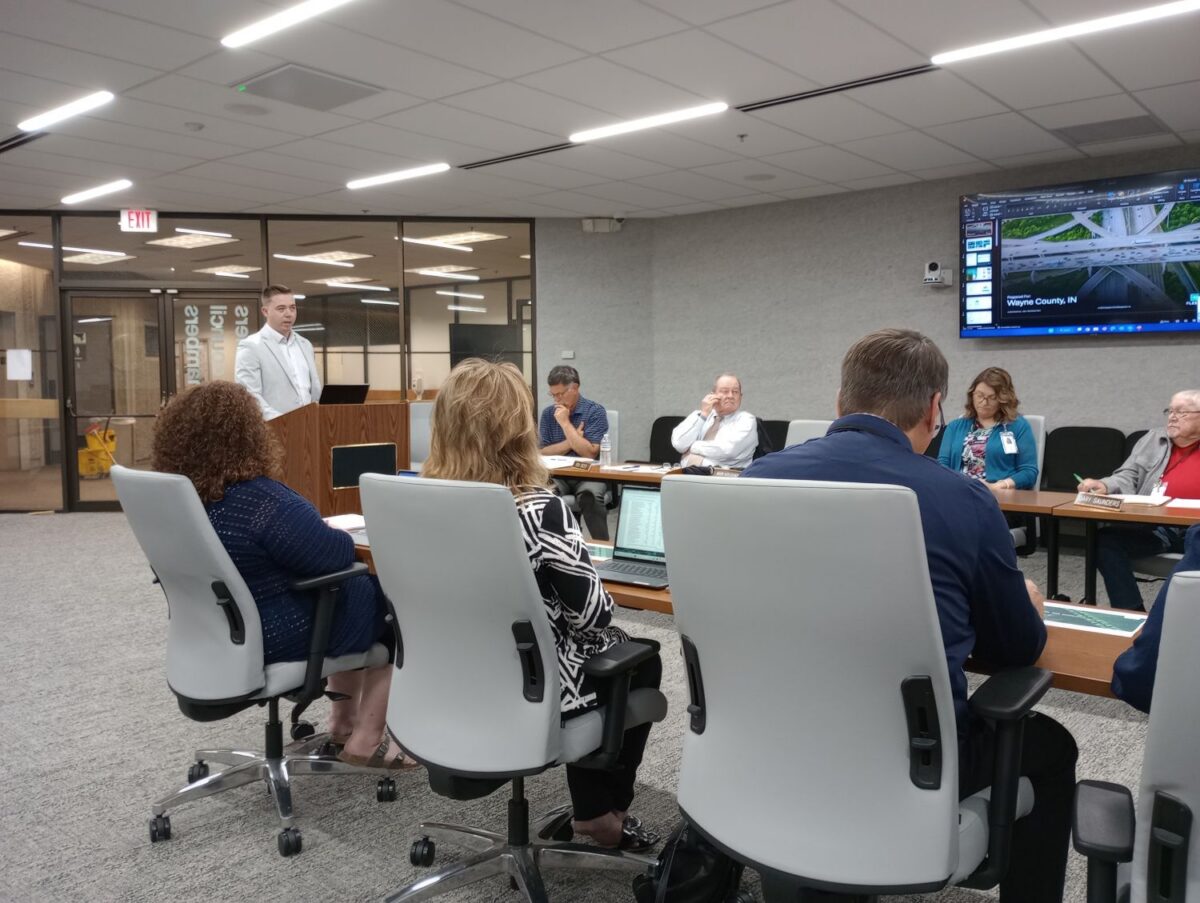
Wayne County could save about $1.3 million during the next decade with Enterprise Fleet Management buying and selling the county’s vehicles instead of county officials doing it themselves.
That’s the number Nate Berg, an Enterprise account manager, presented during the Wayne County Council and commissioners workshop May 20. Enterprise manages fleets for 50 Indiana governmental entities.
Commissioner Aaron Roberts initiated discussions with Berg during a conference, and Berg has twice presented Enterprise’s fleet management program to the county’s fleet committee.
“I do see a lot of value in this program,” Roberts said.
Berg said Enterprise would help develop the next year’s vehicle replacement plan prior to budgeting. It then would order vehicles on the county’s behalf, paying less because of its nationwide buying power, for delivery during the budget year. The county could then lease, finance or pay cash for the vehicle; however, Enterprise maintains ownership, handling registration and titling. Because it is the owner, Enterprise can later sell vehicles for more than the county receives at auction.
Berg said Wayne County currently keeps vehicles about a dozen years on average, and Enterprise would like that to be five years. That would keep 90% of the fleet under warranty.
He provided a plan that would sell off county vehicles beginning with those that are at least 10 years old with at least 100,000 miles during the first year, then at least 8 years old with at least 80,000 miles the second year. That’s when he showed an estimated $1,358,591 savings the next 10 years for vehicles outside the sheriff’s department. The plan would cost the county an estimated $45,045 more for sheriff’s vehicles, mainly because the department has Durangos that it is replacing with more expensive Chevrolet Tahoes. Overall, that still would provide an estimated $1,313,546 savings.
Enterprise charges a monthly fee of $20 for each vehicle paid for with cash or 0.1% the purchase price of each leased vehicle. It also charges $400 per vehicle it sells.
Max Smith, council’s president, said the fleet committee is not yet providing a recommendation about contracting with Enterprise. He said the committee would lean toward paying cash rather than leasing.
No decision was made after Berg’s presentation.
GROW grant
Wayne County Health Department Director Dan Burk received commissioner and council permission to submit letters of intent for two project proposals in the state’s Growing Rural Opportunities for Well-being program.
The health department is proposing a community health nurse that would cost $130,000 and a maternal/child health program costing $608,000, including a new mobile unit. The proposals will be considered by Region 4, which includes Wayne County. Each region will select projects for submission to the state.
Burk said it’s unlikely the county would receive complete funding for the projects as proposed.
Land bank board
Commissioners and council members made their appointments to the Wayne County Land Bank board. The land bank will acquire and hold residential properties throughout the county while looking for qualified buyers to rehabilitate them.
Council appointed Kyle Clark of Wayne Bank, and commissioners appointed Steve Higinbotham, the county administrator. Clark brings banking experience and Higinbotham provides planning and zoning expertise. Each would have a two-year term.
Other actions
- Council agreed it would provide as much as $160,000 from its one-time line item for three Chevrolet Tahoe police vehicles for the Wayne County Sheriff’s Office. Commissioners then voted to solicit bids for the vehicles.
- Council agreed to transfer $85,000 from the housing accelerator line item within the consolidated EDIT budget to the Primex Plastics line item to fund an economic development income tax grant.
- Council members and commissioners approved spending $52,000 from the joint project line item for change orders related to the ongoing courthouse and annex plaza project. The line item within the general fund was created when American Rescue Plan Act dollars were spent on qualifying expenditures that normally would be paid through the general fund. ARPA dollars were used instead because of the deadline for spending them.
A version of this article appeared in the May 27 2026 print edition of the Western Wayne News.