

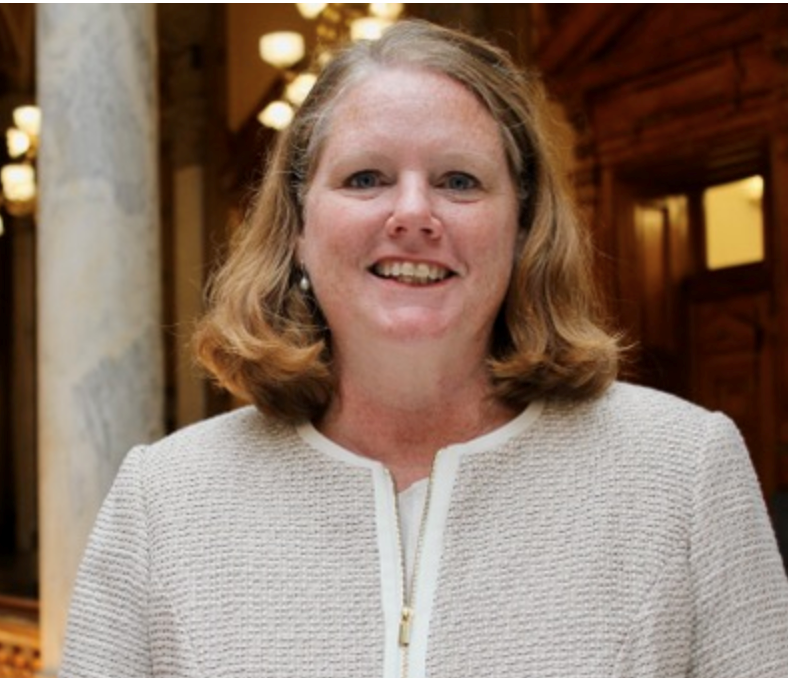
Cynthia (Cinde) Wirth is running for Indiana House District 6 as a Democratic candidate in the 2026 general election.
2026 Election Guide
The Western Wayne News asked candidates in contested races for the Nov. 3, 2026, general election the same questions.
- List your education and employment history highlights (100 words or less).
- What are two specific reasons you decided to run for this office? (100 words or less.)
- If elected/reelected, what are your top three priorities for your time in office? (150 words or less.)
- What are two specific skills you would bring to the office to benefit constituents, if elected/reelected? (100 words or less.)
- What’s one aspect of the government body you’re seeking to join or lead that you think is working well and should continue? (100 words or less.)
- What’s one aspect of the body you’re seeking to join or lead that you think needs to change, and what specific action(s) would you pursue to change it? (100 words or less.)
- Will you accept the results of the election process even if you are not elected/reelected? (50 words or less.)
- With state and federal changes limiting funding for government services, what specific strategies will you pursue if elected to sustain the finances of the body you’re seeking to join or lead? (150 words or less)
- Beyond encouraging attendance at public meetings, how do you plan to involve residents in decision making processes that the office you seek is a part of? (100 words or less.)
- Any other comments you’d like to share about your candidacy? (150 words or less.)
Candidates were given three weeks to respond with a firm deadline and word limits. We share their answers here, unedited from their original form.
For full election coverage, visit the Western Wayne News 2026 Election Guide.
Bio highlights: I am a biologist, educator, researcher and small-business owner from Columbus, Indiana. A first-generation college graduate, I earned a bachelor’s degree in biology and Spanish, University of Evansville in 1992; a master’s degree in anthropology and archaeology, Indiana University Bloomington in 2009; and a Ph.D. in cultural and educational policy, Ball State University in 2025. I taught high school biology and environmental science at Columbus Signature Academy New Tech and developed a study abroad marine-ecology field program. My work also includes environmental and archaeological research consulting, furniture-business ownership, and service as an Albert Einstein Distinguished Educator Fellow in Congress
Reasons you ran: I decided to run because I saw my students struggling with the same problems families in our community face every day: food insecurity, unstable housing, and healthcare they cannot afford. Hoosiers deserve someone who will fight to make sure people can live healthy, secure lives.
I am also running because corporations and special interests have far too much power in government. Their influence puts our clean air, water, soil, food safety, and communities at risk, including from poorly planned data centers. I will put people and our communities ahead of corporate profits.
Top priorities: First, I support Medicare-for-All because healthcare is a right. No one should go without care, ration medication, or face bankruptcy because an insurance company puts profit ahead of a doctor’s decision. Single-payer, universal healthcare would reduce waste, lower costs, and make sure every Hoosier can see a doctor when they need one.
Second, I will fight for affordability. Hoosiers are being squeezed by groceries, rent, utilities, child care, and prescription drugs. Working people need higher wages, affordable housing, strong public schools, and relief from everyday costs. Families should not have to choose between paying bills, buying groceries, and getting medical care.
Third, I will fight corruption and corporate influence in government. Data-center companies should not be able to buy their way into local government through tax breaks, backroom deals, and promises that leave communities with higher water and electric bills. Government should work for people, not billionaires and corporations.
Specific skills: I bring experience managing high-stress situations, listening to people with different perspectives, and finding practical ways forward. I learned those skills teaching high school science, where I had to build trust, de-escalate conflict, and keep students focused on solving problems together. Congress needs more of this now.
I also bring a scientist’s approach to public service by asking good questions, following evidence, explaining facts clearly, and being accountable for results. Constituents deserve a representative who listens, does the work, and puts solutions ahead of partisan politics.
Should continue: One thing Congress should make stronger and more responsive is district office constituent-services. Staff help people navigate veterans’ benefits, Social Security, Medicare, passports, federal grants, and other agencies that can feel impossible to deal with alone. That work is often quiet, but it matters deeply to families facing a crisis or trying to access services they have earned. I believe a representative’s office should be accessible, responsive, and rooted in the community. I will continue that tradition by showing up in communities to be present with staff and that every constituent is treated with respect and receives a real response.
Needs to change: Congress needs to stop fighting for partisan political advantage and actually solve problems for the people we serve. Americans are fed up with watching basic needs become partisan battles. I will work across the aisle on bills that address real concerns, including healthcare, housing, food security, and protecting clean air and water. I also support a more open legislative process, with bills considered on their merits instead of being loaded with unrelated poison-pill amendments. Bipartisanship is not giving up your values, but is doing the work, finding common ground when possible, and delivering results for our communities.
Accept election results: Absolutely. The results of the election reflect the will of the people, and I will respect the results. Whether I am the winner or not, voters choose their representative and I will continue serving my community and working to strengthen democracy.
Funding strategies: We need to safeguard Social Security by eliminating the income cap so wealthy Americans pay the same rate as working people. We must protect Medicare from privatization and prescription drug price gouging, strengthen Medicaid so people can get care regardless of income or disability, and expand SNAP benefits so no family goes hungry.
We can pay for these priorities by asking billionaires and large corporations to pay a fair share, closing tax loopholes, and ending giveaways that do not benefit working people. That would protect Medicare, Medicaid, and SNAP while reducing the federal deficit.
We don’t need to spend billions on unauthorized wars or put $100 billion into ICE while families are being torn apart.
More than 70 percent of Americans support universal, single-payer healthcare. This can be funded through a fair, progressive payroll tax, would cut waste, lower costs, save taxpayers money, and make sure everyone is covered.
Engaging the public: I will listen to my community first. Real change starts from the ground up, not from high-priced D.C. think tanks. I will hold regular listening sessions online and in schools, churches, union halls, and coffee shops across the district. I will also maintain a year-round website and hotline for ideas and concerns.
Before major votes, I will use surveys and focus groups to hear from workers, parents, teachers, students, farmers, and retirees. An annual State of the District survey will help identify needs in healthcare, housing, child care, wages, and pollution. My accountability is to constituents, not lobbyists.
Other comments: I’m a 7th generation Bartholomew County resident. I grew up here, went to public schools here, raised my family here, and taught public high school here. I am a proud member of this community.
This district covers 11 counties and more than 3,000 square miles. I have been to every corner, talking with voters. I have stood with union members fighting for fair wages, attended community meetings about data centers, and supported neighbors organizing to protect their communities. At festivals, parades, meetings, and meet-and-greets, I ask one question: “What keeps you up at night?”
I hear the same answers over again: Congress is not acting, the executive branch is not being held accountable, and families cannot afford to live. Increasing costs of housing, healthcare, education, gas, groceries, utilities, and rent are all breaking families. We have to do better, and we can do better. Hoosiers are Wirth fighting for.