

When approving the 2026 budget, Richmond Common Council, the city’s fiscal body, implemented a policy giving itself additional oversight of city departments’ spending.
That oversight became apparent during council’s Feb. 2 meeting, generating discussion among council members. An appropriation resolution requesting $329,343.65 for infrastructure and development, code enforcement, board of public works and safety, police, and human resources expenditures was reduced by $85,050 before its unanimous passage. Jerry Purcell, chair of council’s finance committee, said too much was included in blanket requests.
“We’ve decided to take a little bit more control and make sure money is spent where they tell us they’re going to spend it instead of just moving it around at will once we appropriated it at the first of the year,” Purcell said.
During prior years, council would pass the annual budget and simultaneously appropriate the budgeted funds. Departments could then spend appropriated money even if council did not approve of the expenditure. For 2026, council withheld appropriation of certain line items, requiring requests greater than $5,000 come before council.
“This forces the department heads to be more thoughtful with their requests,” said Justin Burkhardt, council’s president.
Council is appropriating budgeted funds bit by bit, so it could later approve additional expenditures in the areas that were reduced.
“It’s a good process,” Controller Tracy McGinnis said. “It’s working.”
McGinnis said the process is more time-consuming and a work in progress, but the city will prove that it does not spend frivolously. Burkhardt said the policy is about trust, transparency and accountability.
He specifically mentioned money spent last year on Richmond Police Department Major Adam Blanton’s lawsuit against Prosecutor Mike Shipman over Shipman placing Blanton on a local Brady/Giglio list of officers whose court testimony could be impeached because of previous actions.
The mayor’s office paid $34,559.22 for a third-party investigation, and the police department paid Indianapolis law firm Bose McKinney & Evans $71,363.54 for legal representation. Council opposed spending the $105,921.76 in taxpayer money, but was powerless to stop the spending because the money had been appropriated. Council could only symbolically oppose the expenditures with an 8-0 vote.
“The system’s not going to be perfect in the beginning, but if we can put more minds together and work together to make a better tomorrow for the community, I think that’s what we all want,” Burkhardt said.
Council member Bill Engle questioned the policy, initiating council’s discussion.
“I just have a concern that we are overstepping our responsibilities,” Engle said.
Purcell replied: “Not at all. We’re finally meeting them.”
Urban forestry
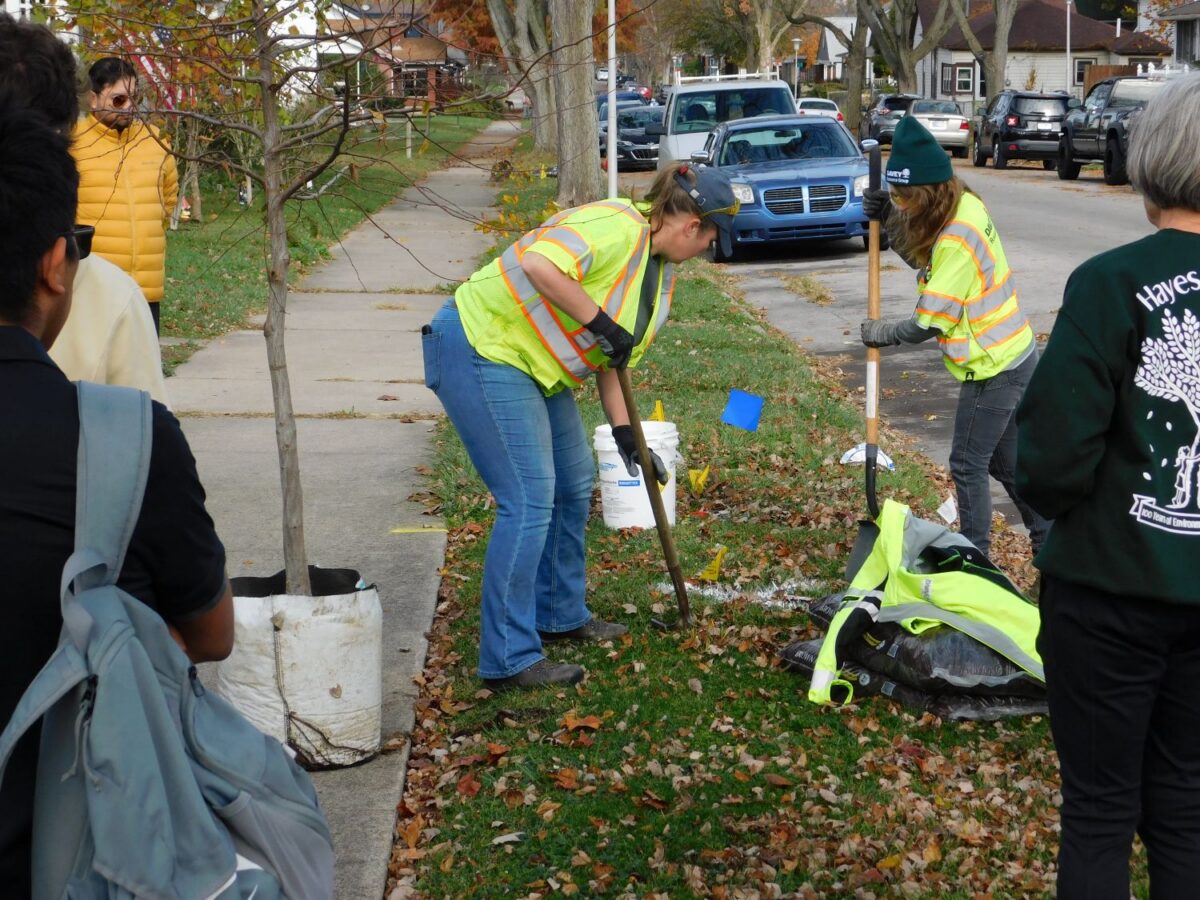
Council approved the city’s participation in another tree-related cohort through the Environmental Resilience Institute at Indiana University. The effort includes 400 hours of work by a graduate student fellow to design an urban forest management plan, implement goals within the plan and conduct an education-based planting event.
The city’s contribution is $3,700 from the street department’s tree budget to receive between $60,000 and $80,000 in benefit.
Laura Karnes, the landscape and naturalist leader for Richmond Parks and Recreation Department and a certified arborist, said a management plan is the nuts and bolts of how to prioritize maintenance on the city-owned trees, providing the city’s Street Tree Commission with goals and the action plan to achieve them.
Davey Resource Group is currently conducting an inventory of city-owned trees to identify types and conditions. Karnes said about 2% of trees are in need of immediate removal.
“I think this timing of it is really critical for Richmond,” Karnes said.
Urban forestry involves public trees that provide a canopy to cool neighborhoods, lower energy bills and improve public health. It includes planting, trimming and maintenance for storm preparedness.
The city participated in a 2024 Urban Green Infrastructure cohort through ERI that identified priority planting sites for 100 trees and includes three years of maintenance for those planted trees.
Karnes also reported that she’s taking her first class toward an urban forestry certificate through Oregon State University. Council in November approved acceptance of Indiana Department of Natural Resources funding for Karnes’ certificate work.
Other approvals
Council approved two appropriation ordinances on second reading.
Because of 21 job eliminations for the 2026 budget, $125,000 was appropriated for unemployment compensation.
Another $15,000 was appropriated to reimburse firefighters for mental health services the past two years and pay for those services this year.
A version of this article will appear in the February 11 2026 print edition of the Western Wayne News.