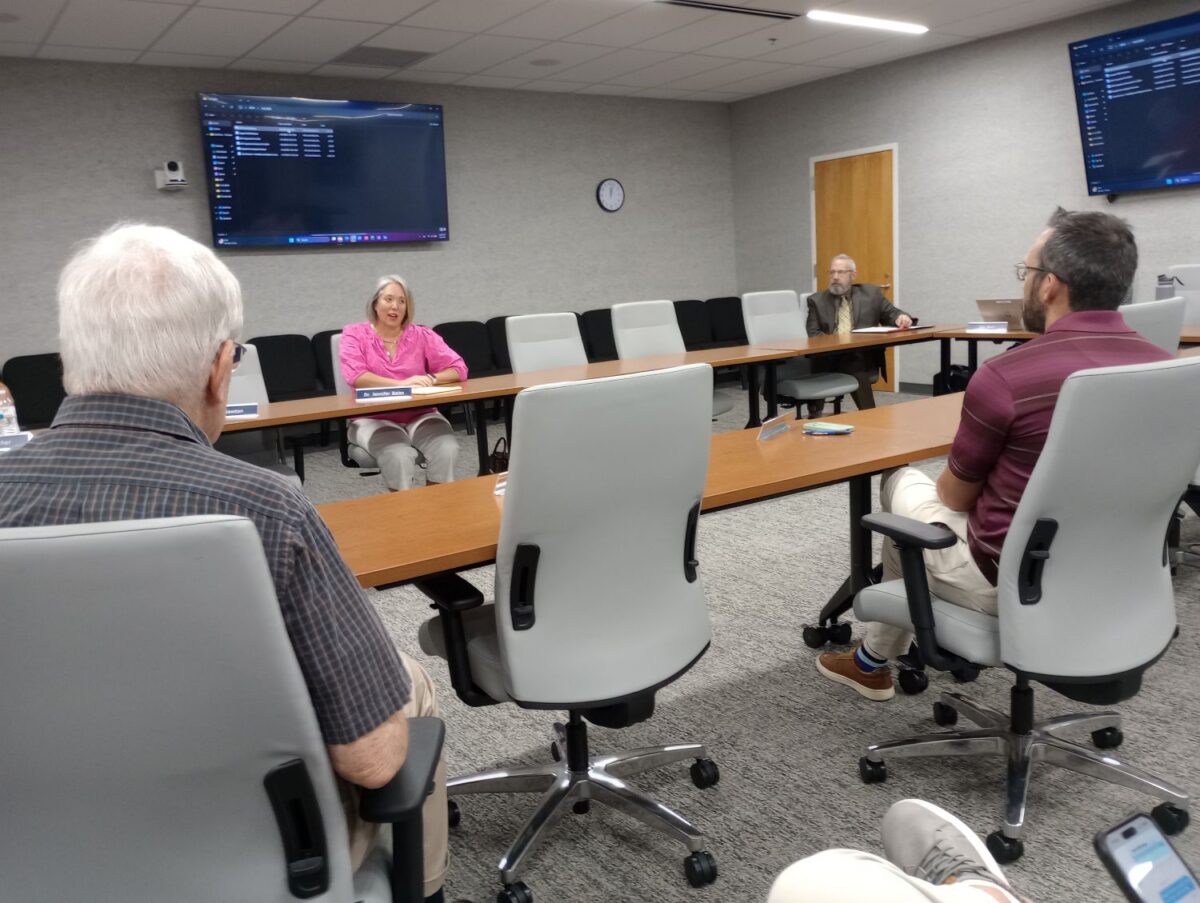
Dr. Jennifer Bales has never personally seen a measles case, but after 21 years practicing emergency medicine, Wayne County’s health officer might get her chance.
There had been three confirmed measles cases through Sept. 9 in Wayne County. Bales told the county’s Board of Health on Sept. 8 that there were two cases, then Dan Burk, director of the county’s health department, updated the county’s commissioners Sept. 9 that a third case had been confirmed that morning.
“This is a big deal that we’re seeing this now,” she said.
All three were unvaccinated adults, Burk said. In Indiana, cases had only been confirmed in Parke, Switzerland and Wayne counties, Bales said.
Measles is highly contagious, spreading through the air. It remains infectious for up to two hours in the air, and those with measles are contagious for four days before they experience a telling rash. Bales said that if someone with measles enters a room with 10 people, nine of those people will likely also contract measles.
“This is significantly more contagious than even COVID, which is one of the most contagious things we’ve talked about in recent history,” Bales said.
Initial symptoms include a runny nose, cough, fatigue, fever and spots in the mouth that resemble other ailments. About Day 4, however, the classic rash appears on the face, then spreads down the body, lasting about four days.
One in 20 people afflicted with measles will develop pneumonia, which is the leading cause of measles-related deaths, Bales said. In one of 1,000 cases, measles causes brain swelling that can lead to brain damage.
There is no specific treatment for measles, so Bales said the best solution is protection provided by vaccination. The target is a 95% vaccination rate with the two-dose measles, mumps and rubella vaccine. Two doses of the MMR vaccine are 97% effective, Bales said.
Children are generally vaccinated between 12 and 15 months then between ages 4 and 6, meaning those younger than 1 are vulnerable to measles. Bales said there’s no proven link between the MMR vaccine and autism.
Residents born before 1957 are considered immune from natural infection when measles was widespread. From 1957 through 1968, a different vaccine was used, so residents vaccinated in that era might need an updated dose, Bales said.
In the previous two weeks, the health department had provided 25 MMR vaccines.
“The best-case scenario is that if you are not protected you get a vaccination to protect yourself,” Bales said.
The health board did not have a quorum for its meeting, so it could take no actions.
A version of this article appeared in the September 16 2026 print edition of the Western Wayne News.